Instagram vs Reality: Cosmic Edition
Instagram vs Reality: Cosmic Edition
you scroll Instagram and see a stunning image of the Carina Nebula swirls of violet-pink gas, glowing stars, cosmic fireworks. You double-tap. You save. You add “#UniverseMood”.
But here’s the kicker: the real universe is way more chaotic, weird, counter-intuitive and yet way more interesting than the “perfect filter” version. We’re taking the “beautiful pic vs. science truth” ride the glam vs. the behind-the-scenes blooper reel of the cosmos. Buckle up.
The Pretty Picture: “Look how aesthetic I am”
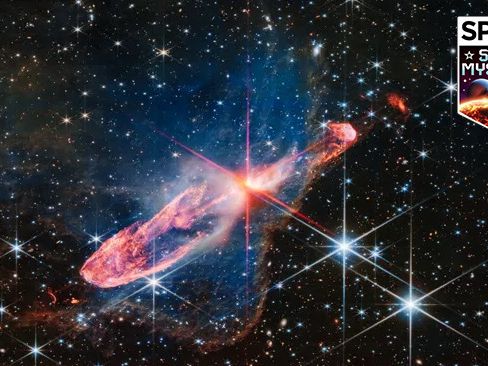
Millions of us love those shots from the Hubble or James Webb Space Telescopes: big nebulae, vibrant colors, star nurseries, swirling galaxies. NASA highlights galleries of “mesmerising pictures of the universe,” showing vibrant gas clouds and stellar nurseries.
Why this matters: It draws us in. It says “the universe is beautiful, you’re part of something epic”. And it is. But-yes-there’s a “but”.
Reality Check: “Wait… what’s actually going on?”
Behind that pretty picture lies the messy, glorious truth of physics-
1. False Color and Enhanced Wavelengths
To truly grasp false color, think about an X-ray at the doctor's office it reveals what your eyes can't see. False-color images are the X-rays of the universe.
Here’s how they work:
Invisible Wavelengths: Scientists capture data using light wavelengths invisible to humans (like infrared, radio, or ultraviolet waves).
Revealing the 'Bones': This invisible data reveals hidden structures cold dust, hot gas, or chemical composition that are crucial for scientific analysis.
Assigning Aesthetics: To make the data visible and beautiful, scientists then assign colors we can see (red, blue, green) to those invisible measurements.
2. The Invisible Majority: Dark Energy and Dark Matter
A vast majority of the universe is dark, quiet, and invisible. When you look up, you’re missing 95% of the content:
Dark Energy (68%): The mysterious, invisible force driving the accelerating expansion of the universe.
Dark Matter (27%): The invisible mass that provides the gravitational scaffolding for galaxies and cosmic structure.
Visible Stuff (5%): Everything you see stars, planets, nebulas, and us is just a tiny fraction of the total cosmic mass.
3. Cosmic Chaos and the Galactic Blooper Reel
When you zoom out from that pretty space pic, you’re basically in a storm of invisible stuff (dark matter), riding on a filigree of a cosmic web.
The structure is far from serene swirls:
Violent Mergers: Galaxies constantly collide and merge.
Black Hole Slurping: Supermassive black holes actively "slurp" or consume surrounding stars and gas.
Structural Complexity: The universe is organized by immense, strange cosmic filaments that are massive, dynamic, and anything but symmetrical.
“When you expect vs when you get”
Expectation (Instagram Version) | Reality (Science Edition) |
|---|---|
✨ "Hey look, I’m a pastel nebula, floating gently." | 💀 "Star nursery? Actually raw gas clouds, supernovae blasting metal, chaos." |
🪐 "Galaxies in perfect symmetry." | 🌌 "Galaxy? Merging, colliding, black holes slurping stars." |
💫 "Stars forming like whimsical fireworks." | 🕳️ "Beneath the surface: dark matter webs, invisible forces." |
“The images are real lol. They're just taken in wavelengths not visible to the eye…”
“It gives us a direct look into how the gravitational influence of matter changed over billions of years.” on cosmic CT-scan of structure
So if the universe had a selfie-stick, it’d still look beautiful but when you zoom out, the noise, the weirdness, the invisible bits all crash the aesthetic.
Your Cosmic Origin Story
Knowing the universe is weird makes your own existence more special. You are physically connected to the chaos you’re scrolling past:
We Are Supernovae: The elements that make up your body the carbon, the oxygen, the iron were forged in the violence of exploding stars (supernovae).
Not a Background: That nebula you double-tapped isn't just a pretty background; it’s raw material from your own cosmic origin story.
The Mess Made Us: The chaos, the mess, and the violence of the cosmos are literally what made complex life possible.
Why the difference matters
-
Perspective: Seeing only the “beautiful part” can make us think the universe is tame. But knowing the weird physics helps us appreciate how wild our cosmic home is.
-
Humility: The universe isn’t just backdrop for our selfies. There are forces vastly bigger than our imagination (dark energy, cosmic expansion).
-
Inspiration: The weird stuff sparks curiosity. Galaxies merging, black holes warping space–time, cosmic filaments spanning millions of light‐years.
-
Connection: Even though we might seem tiny, we live in a universe that’s stranger and grander than we expect. Our existence is even more special.
Final thoughts
Beauty matters. Those space-images spark wonder. But if we only stop at beauty, we miss the story. The messy, weird, awe-striking story of how the universe works.
Think of it as: the universe-selfie vs the behind-the-scenes blooper reel.
We’re living in something bigger, bizarre, humbling and also gorgeous beyond words. So go ahead: double-tap that nebula. Then pause. Then imagine the hidden drama behind it.
Comments
Post a Comment